Science Journalism

University of Ottawa researchers want you to “text4science”

OpenLab

Gazette
published: Oct 19
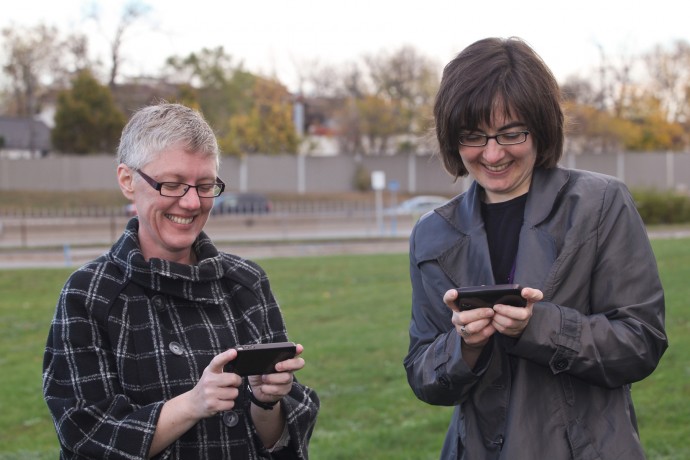
Lynne Bowker, chair of the School of Information Studies, and Elizabeth Marshman, assistant professor in the School of Translation and Interpretation.

The Scientists
?4U: WTF does %-) mean? Language has never been static. It is continually shifting, but non-traditional languages like Textese (any text messaging language) or Olbanian (Russian Internet slang), which are intimately tied to their technological media, seem to evolve even more quickly than the spoken word. You might think this would be a disaster for linguists, but Lynne Bowker, chair of the School of Information Studies, and Elizabeth Marshman, assistant professor in the School of Translation and Interpretation, would disagree.

The Science
As with so many other researchers around the world, Bowker and Marshman see digital communication as a treasure trove. Each digital message is recorded and is computer-readable, which means that analysis software can be used to sift through mountains and mountains of data to illuminate differences between unique groups, identify patterns and chart trends over time.

There’s certainly a sea of digital messages available to Bowker and Marshman. Twitter, Facebook, countless forums and a slew of other social media offer an entire spectrum of publicly available messages for researchers to dive into. As with all communication, the language we choose to use in these public arenas reflects so many facets of who we are: our own cultural, national and personal identities. Yet it’s not an intimate form of communication: these messages are more like public announcements than conversations.

Text messaging, on the other hand, is extremely private. We text one-on-one to our children, our bosses and even our grandmothers, so the language we choose to use is extremely context-dependent. Some texts are more formal than others, some skip punctuation and, in Ottawa, some are a mixture of French and English. But unlike social media messages, these texts are private. Scientists have a fairly poor idea of the texting practices of Canadians.

The Strategy
That’s why Bowker and Marshman want you to text4science. They are part of a consortium of Canadian researchers attempting to gather over 100,000 donated messages. To participate, just forward your text messages to 202202. For more information, you can visit the project’s website at www.text4science.ca *.

This isn’t the first project of its kind. In 2004, a Belgian university launched a very successful campaign to gather French-language text messages. Since then, partner universities have extended the project around the world. The Canadian project includes researchers at the Université de Montréal and Simon Fraser University, along with Bowker and Marshman from the University of Ottawa.

Please consult the website for more information.
 

uOttawa biotechnology researcher uses genetic “creative commons” for “spare parts”

OpenLab

Gazette
published: Sept 28

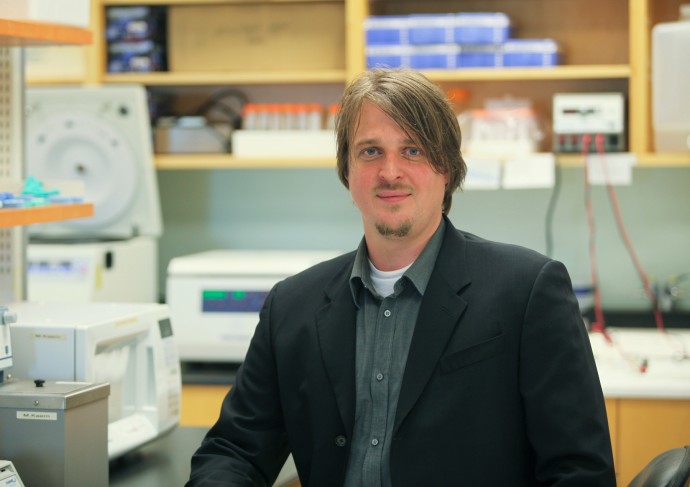
Mads Kaern

The Scientists
What do you envision when you think of molecular biology? Maybe you see the marvels of evolution or symphonies of chemical complexity.
Mads Kaern sees spare parts.
Kaern, a member of the Ottawa Institute of Systems Biology, is a sort of biotechnology inventor. He approaches networks of genes (the units of DNA that code for proteins and, thus, set many of our phenotypes) like an electrical engineer would approach a circuit. By knowing how the component genes interact, Kaern can predict what will happen if he replaces one gene with another.

The Science
Modifying DNA is actually a fairly routine task in modern biology. Enzymes can be used to snip DNA in two, inject a new gene and stitch the chain back together again. Voila! New genes and new regulatory chunks of DNA are added to a genetic circuit. (Regulatory chunks like promoters, enhancers and terminators turn on or off different genes and link gene networks to the outside world by responding to a drugs or different types of food.)
When Kaern wants to engineer a new network, he needs these vital chunks of DNA.
But where can he get them? One answer is he can buy them. Companies exist that own genomic libraries and let scientific researchers, like Kaern, use these libraries—for a price.
But that cost can be frustratingly high and Kaern is an inventor: he needs a large toolbox.

The Solution
In response to the privatization of genetic libraries, the Registry of Standard Biological Parts was founded in 2003. It’s an open source genetic archive of over 3,400 biological parts available to everybody. Like so many open source projects, the Registry encourages users not only to take from the archive but also to give back to the community. That’s ok with Kaern.
One way that he contributes to the community is by participating in iGEM, the International Genetically Engineered Machine competition. Teams of students are sent a kit of biological parts from the Registry and given one summer to use the parts to build useful biological systems.
Kaern has led the uOttawa team for four years.  Last year it won a gold medal for contributing a new standardized sequence of DNA for eukaryotic cells. Kaern and his team are part of iGEM, which holds a Creative Commons licence. Not only do they have the community’s toolbox open to them but they also participate in a competition that encourages ideas to flow quickly throughout the scientific community. Getting to see what works and what doesn’t for other groups is invaluable to a biotech inventor like Kaern.

Note: Professor Kaern will be discussing the Registry of Standard Biological Parts and iGEM on September 30 at 11:00 a.m. at the Syn-Bio Colloquium. The all day– colloquium, which will discuss the interface between science and policy, costs only $11.30 for students.


Using isotopes found in hair to solve cold cases

OpenLab

Gazette
published: Sept 21

Michelle Chartrand and Gilles St-Jean

The Scientists

In 2001, the skeletal remains of a woman were discovered in downtown Montreal. The corpse, dubbed Madame Victoria, had lain undiscovered near the Royal Victoria Hospital for two years. Police had nowhere to start and the case went cold.

Five years later, the RCMP invited University of Ottawa professor Gilles St-Jean to suggest ways his research on stable isotopes could help forensic science. The force was excited about the possibilities, and decided to run a pilot project. St-Jean hired post-doctoral researcher Michelle Chartrand to apply isotope mass spectrometry and help law enforcement officials. After five years of work, St-Jean and Chartrand can now determine where people (even those like Madame Victoria whose corpses have decayed over a decade) have recently been, thanks to isotope analysis.

The Science

The food we eat and the water we drink is made up of atoms, atoms that come in different flavours, known as isotopes. Isotopes are atoms of the same element but with different mass. For instance, hydrogen has two stable isotopes (common hydrogen-1 and rare hydrogen-2), while oxygen has three (common oxygen-16, rare oxygen-18 and -17). Isotopes become incorporated in our bodies though our diets and the water we drink.

This means that analyzing the stable isotopes in tissue can tell investigators all sorts of interesting things. For example, vegetarians are easy to spot through analysis of nitrogen, while North Americans, with their different diet, are easily distinguished from Europeans through carbon signals.

Most importantly for criminal investigations, stable isotope analysis can reveal differences of location. Isotope presence isn’t the same everywhere. Water found in different regions has different isotope content. St-Jean and Chartrand can measure the ratio of isotopes found in a person’s tissue, compare it to a reference and determine if there is a match.

Even better, a person’s hair offers more information than ordinary tissue. Since it grows at about 1 cm per month, hair acts as an archive that records location over time and potentially provides police with years worth of information.

The Solution

Three years ago, all this this forensic power was useless. To actually figure out where a person was from required a database mapping out isotope ratios across the country.

So Chartrand and undergraduate researcher Jonathan Mayo jumped in a car and spent four years driving over 40,000 km across Canada building a detailed map of isotopes.

Armed with their invaluable map, St-Jean and Chartrand solved the police’s quandary: Madame Victoria had lived in seven separate locations in the three-and-a-half years prior to her death. She began in northern Ontario or Quebec and moved southward, stopping intermittently until she arrived in Montreal.  And none of this could have been known without the forensic power of isotope analysis developed at uOttawa.

EOF from Single Tethered Polyelectrolytes

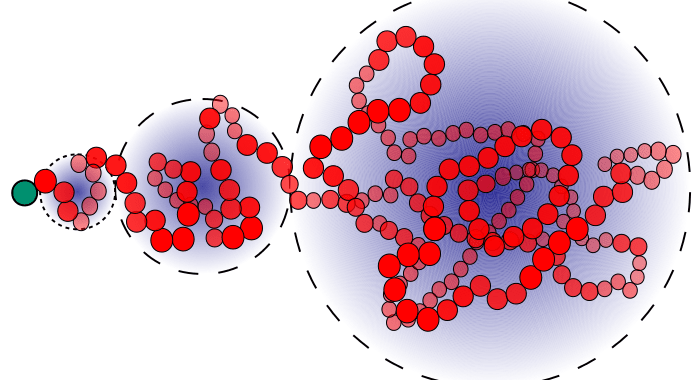
You can read in the polyelectrolyte project page of this site or in our review paper about how the counterion sheath surrounding a polyelectrolyte causes hydrodynamic interactions to be screened, which makes polyelectrolytes “free-draining”. In brief, this occurs because the electric field acts on the polymer, which moves through the surrounding fluid shearing it. However, the total force on the counterion sheath is equal and opposite to the force on the polymer and the counterions also shear the fluid. The shear virtually cancels out on length scales longer than the thickness of the counterion sheath (the Debye length).

But imagine what happens if both an electric field and also a mechanical force act on the polyelectrolyte chain. The counterions do not form a connected object and so the mechanical force doesn’t act on them – only the electric field acts on the counterions. Therefore, the shear doesn’t cancel out and there is a net flow of counterions relative to the polyelectrolyte’s reference frame.

When the polymer is subject to a mechanical force (such as a tethering tension) there is (EOF) at the surface of the chain generated by the electrophoresis of the counterion sheath relative to the stationary chain. This is all very well described by the principle of Electro-Hydrodynamic Equivalence Principle.
The Equivalence Principle states that when polyelectrolytes with a thin counterion sheath are acted on by an electric and mechanical force simultaneously, one can replace the electrostatic and hydrodynamic equations of motion with an effective local flow equal to the translational velocity that the polyelectrolyte would have during in free-solution electrophoresis. It can not be overstated how significant this is for electrophoresis of polyelectrolytes. According to the Equivalence Principle, researchers who are able to design devices that apply any mechanical force in concert with an electric field may achieve length-dependent size separation.

It is well established that the Equivalence Principle can be used to replace the complicated electrohydrodynamics with an equivalent incident flow with respect to chain conformation. But what is more difficult to demonstrate is how approximate the equivalence is for the generated electro-osmotic flow (EOF) of the internal and surrounding fluid.

MPCD (with our mean field MPCD-MD Debye-Hückel algorithm) is the ideal computational method for testing the accuracy of the Equivalence Principle from the perspective of the fluid.

Burying nuclear waste

What’s he building in there?

the Fulcrum
Published: Apr 4

The problem

A FIFTH OF the world’s uranium comes from Canada. CANada Deuterium Uranium (CANDU) reactors have been safely running since the 1950s, but nuclear energy is not without its problems. A handful of leaks have occurred, raising questions about waste management.
Storage of nuclear waste is a particularly important question right now as there is a proposal to build up to four new nuclear reactors at the Darlington Nuclear Generating Station on the northwest shore of Lake Ontario.
Plans to ship waste to depositories in the shield are controversial amongst northern communities and many critics are uncomfortable with the idea of transporting nuclear waste over such long distances.

The researcher

Ian Clark is a professor in the Department of Earth Sciences at the U of O who uses the environmental isotopes found in nature to investigate deep crustal water and geochemical and biochemical processes that occurred millions of years ago.
Clark drills for rock samples and then analyzes the water and gases that have been trapped in these rocks for millions of years. He can determine if the groundwater has been totally isolated or if, over millions of years, new water has been slowly moving through the rocks.

The project

Clark uses natural isotopes as a tool but that knowledge is also extremely useful for predicting the outcome of burying nuclear waste. He was asked to be part of a team that would assess a site at Kincardine in southern Ontario, close to both the Darlington and the Bruce Nuclear generating stations.

The key

The Northern Shield may sound like the perfect place to bury nuclear waste, but according to Clark, it’s not. Yes, the igneous rock making up the shield is hard so nuclear waste shouldn’t diffuse through it, but it has fractures. The shield is leaky because faults let water flow quickly from one point to another.
Kincardine is much better according to Clark. He analyzed rock samples from six holes drilled 850 metres down to sedimentary rock—formed from deposited sand and clay at the bottom of ancient oceans—at the Kincardine site. Clark ground up these rocks and baked fistfuls to get about two drops of water, water that had been trapped for some 400 million years. Helium was also trapped in the rocks for more than 260 million years.
As these rocks are very tight and don’t fracture, and the site is very close to Ontario’s fleet of nuclear reactors, Clark believes Kincardine is an ideal environment and much better than any in the shield to bury nuclear waste.

Nanoengineering cyborgs

What’s he building in there?

the Fulcrum
Published: Mar 14

The problem

CYBORGS AREN’T SCIENCE fiction. All around us people with pacemakers, insulin pumps, and prosthetic implants continue to live normal lives because of mechanical and electronic parts within their bodies. It’s not sci-fi; it’s mundane.
But that doesn’t mean combining human bodies with technology is scientifically simple. Even relatively straightforward implants need to be biocompatible or human tissues won’t accept them. Implants also need to be reliable.
We may take it for granted, but our bodies are amazingly robust. When we sustain injuries, we heal—but implants don’t. Hip replacements are some of the most successful prosthetics, but even they have a 20 per cent failure rate after 20 years.

The researcher

Amirhossein Ketabchi came to Canada to do his undergraduate degree in engineering at the University of Ottawa. Here he found a tight-knit community of students and decided to stay in Ottawa to continue graduate studies. Ketabchi is now a master’s student in the Surface Nanoengineering Laboratory with an interest in medicine and bio-materials.

The project

Titanium is one of the best bio-materials for implants. It’s light, strong, non-toxic, resistant to corrosion, and isn’t bad at osseointegration—the merging of bone and non-bone into a single object. Not all metals are good at this, but titanium isn’t bad. Ketabchi thinks he can engineer it to be better.

The key

In order to engineer better biocompatibility, Ketabchi modifies the surface of the titanium. Because your body’s cells are in contact with implants, modifications must change nanoscopic details. Ketabchi does this nanoengineering by dipping titanium into an acid mixtures. The acid causes an oxide layer of open nanotubes to form on the surface of the titanium, which human bone can then grow into. Nanoengineering the surface of titanium like this improves its biocompatibility.
But soaking metal in strong acid for hours and hours weakens it, and the last thing you want is a titanium pin in an implant snapping. So Ketabchi knows there has to be a tradeoff between biocompatiblity and preserving strength to withstand years of fatigue. He tests the endurance limit of pin after pin, looking for the perfect compromise between biocompatibility and strength.

Crammed in the capillaries

What’s she building in there?

the Fulcrum
Published: Feb 9

The problem

DO YOU EVER stop to think about your cells’ needs? Every one of the trillions of cells making up your body requires energy and is fed by blood. Armies of red blood cells continually parade through the heart, to the furthest backwaters of your body, and back again.
To get to every part of your body, the capillaries that conduct these nutrient-carrying cells to their destinations must be tiny. Blood cells are forced to march single file through severely confining micro-veins. In fact, the blood cells are actually 25 per cent larger than the smallest capillaries they travel through. How can this be?

The researcher

Alison Harman is a graduate student in the Department of Physics at the University of Ottawa. As a physicist, she is more interested in the mechanics of cells than anything else. She doesn’t worry about the fact that the cell is alive. Instead, Harman uses simplified computer models to simulate the physical properties of cells.
These virtual cells are still complicated, but they are simple enough that Harman can extract information about cellular membranes without worrying about the intricacies of life.

The project

Harman models the blood cells, simulating each of the lipids that make up the cell membrane, but not the contents of the cell. Each of the lipid molecules are made up of a head that likes water and a tail that avoids water.
To keep everyone happy, the lipids organize themselves into a bi-layer with tails facing in and heads facing out, which results in an empty vesicle.

The key

Vesicles are most comfortable as spheres, but they are very deformable. When they are carried through fairly large capillaries, the flow pulls them out into a flat, parachute-like shape. Faster flow stretches the vesicle longer.
Harman’s simulations show this stretching happens at the edges of the parachute. At very high flow rates—about 100 times faster than blood actually flows in the body—the vesicles eventually break.
Harman sees a different picture in the smallest capillaries. The vesicles are so crammed they must fill the entire tube of the capillary and deform into a pill-like shape. As the flow rate increases, vesicles stretch until they can’t stretch anymore. They usually break along their side where the membrane is closest to the wall, fitting into the capillaries.

LEED at the University of Ottawa

News

the Fulcrum
Published: Jan 11
as an inset to Christopher Radojewski’s

Social sciences under one roof

THE LEADERSHIP IN Energy and Environmental Design (LEED) is a rating system for judging green construction projects. Buildings are given a total of 100 possible points assessing the sustainability of the chosen site, water efficiency, energy and atmosphere impact, materials and resources used, quality of indoor environment, and 10 bonus points for innovative design and regional priority.

The number of achieved points gives the structure a grade:
Certified: 40–49
Silver: 50–59
Gold 60–79
Platinum: 79+

In 2008, the University of Ottawa’s Campus Sustainability Office pledged all new and retrofitted buildings would achieve Silver rating or higher.

What makes it green?

Green wall (also called a living wall).
One huge wall of the atrium will be entirely covered with vegetation and act as a natural air filter.

Heat recovery ventilation system 

Even with the green wall, some ventilation is needed, but exchanging warm indoor air with cold outdoor air (or vice versa) is a waste of energy. By processing the air before it leaves or enters the building, the ventilation system will keep 90 per cent of its heat.

Green roofs 

Three of the roofs will be covered in growth. This follows a strong tradition: The Colonel By building, built 40 years ago, was one of the first green roofs on a Canadian campus.

Data furnace 

The tower is designed to receive 80 per cent of its heat from local campus computers.

Natural light 

Only five per cent of the tower will require lighting. The rest will be naturally lit.

Cellular scaffolding

What’s he building in there?

the Fulcrum
Published: Nov 30

The problem

EVERY CELL THAT makes up our body carries genetic information needed to create a human being. Before birth, those cells become specialized—some cells are blood cells, some are kidney cells, some are neurons, and some are stem cells that have the freedom to become any cell the body needs.
Cellular signalling summons stem cells to injuries, but doesn’t completely control the type of cell they turn into. The local environment plays a part in the process, deciding what the stem cells will become. Temperature, acidity, and material properties of the injury are essential to the stem cells. They will act differently whether the site is stiff, elastic, or immersed in a bodily fluid. Adding to the complexity, unless it’s blood or bone, our body’s contents are not pure solid or liquid—they’re something in-between, like jello or honey.

The researcher

Shane Scott, a master’s student in the physics department at the Univeristy of Ottawa, studies the properties of these complex fluids. He is a rheologist—he studies materials that both stretch and flow, like gels or molasses.

The project

To make stem cells in a lab, you grow them in protein gel. This gel can mimic the properties of different parts of the body. The gel is easy to tweak, and scientists like Scott can add binding domains that act like docking bays for cells to attach to, making them perfect cellular scaffolds.
The behaviour of those cells depends on the rheological properties of the gel, making it necessary to categorize the gel before you start growing cells.
Scott’s proteins are random coils with a helix cap at both ends, which means when he mixes these proteins into a solution, the coils tangle together and form a gel. If he wants a more permanent gel, Scott chemically links the proteins into a network.

The key

Scott characterized protein gels that were part physically tangled and part chemically linked for different temperatures, acidity, and concentrations. Scott showed when a binding domain was added to the gel to turn it into a cellular scaffold, the rheological properties didn’t change, meaning biologists don’t have to worry about stem cells behaving differently because making a protein gel into a cellular scaffold altered their environment.

Survival of the same

What’s he building in there?

the Fulcrum
Published: Nov 2

The problem

NATURAL SELECTION IS one of the cornerstones of modern science. Genetic mutations cause organisms to be more or less fit to survive; those who can’t compete die, while the strong pass on their genetic strengths to a new generation.
Still, genomes are complicated things. Genes can react to internal and external stimulus by changing the type and amount of proteins expressed at any given time. This allows species to respond to new situations faster than if they had to evolve over many generations.

The researcher

Daniel Charlebois is a PhD student in the physics department at the University of Ottawa who conducts research out of the Ottawa Institute of Systems Biology. A physicist studying biology may be a surprise to some, but Charlebois has an undergraduate degree in biology and his training in physics brings with it an extensive knowledge of non-linear systems and computation, which help him to understand gene expression.

The project

Charlebois wanted to look at the potential survival mechanisms besides genetic mutations. Clones all have the exact same genes, but natural variations in the local environment of each cell cause different genes to be expressed in each individual. This “noise” means even a population of genetically identical clones has some natural diversity.

The key


Charlebois simulated a community of clones, which he subjected to a harmful drug. He didn’t let the virtual-reality cells evolve through mutations. Because the cells couldn’t evolve and had no specialized defence against the drug, traditional evolution theory would say they could never develop any drug resistance and would all die—but that’s not what Charlebois saw.
Instead of all dying, a small amount of cells lived through the attack, because at the time they expressed the exact protein mix needed to survive by chance. The generations, which grew out of this small community, were genetically identical to the clones. No mutation or evolution had taken place, despite survival of the fittest occurring.
Genetic noise isn’t always something annoying to be rid of. Charlebois believes natural fluctuations are a survival mechanism life takes advantage of for adaptation without mutation.